

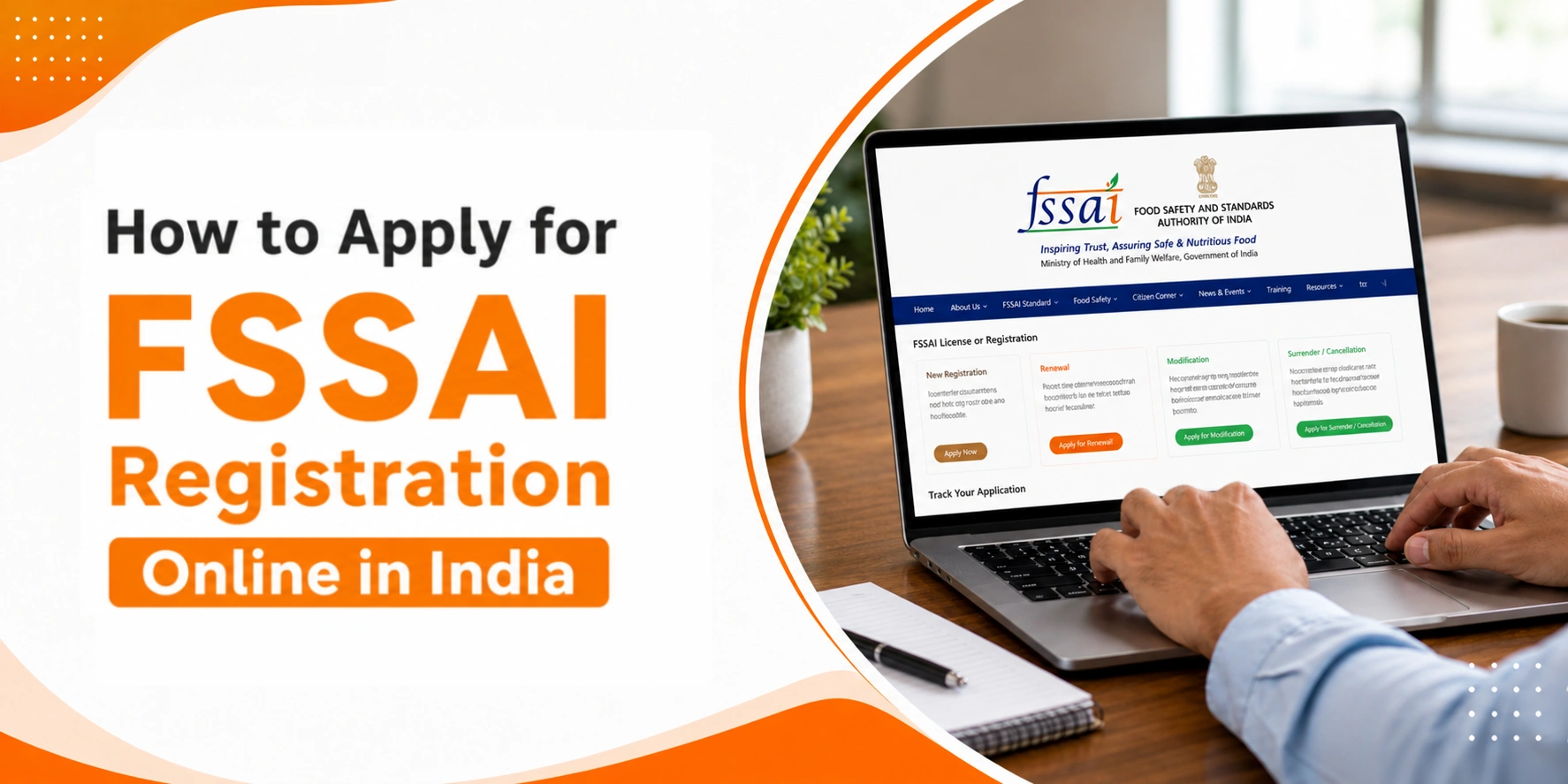
How to Apply for FSSAI Registration Online in India – Step-by-Step Guide
If you run a food business in India, getting FSSAI registration is one of the first and most important legal steps. Whether you are a home chef, cloud kitchen owner, food manufacturer, retailer, wholesaler, restaurant owner, or food e-commerce seller, FSSAI compliance helps you operate legally and build trust with customers.
In this beginner-friendly guide, you will learn how to apply for FSSAI registration online in India, who needs it, what documents are required, the different types of FSSAI licenses, common mistakes to avoid, and how this registration benefits your business in the long run.
What Is FSSAI Registration and Why Is It Important?
FSSAI stands for the Food Safety and Standards Authority of India. It is the government body responsible for regulating and supervising food safety in the country. Its main role is to ensure that food products sold in India meet quality and hygiene standards.
Well, can you trust some food/beverage brands that don’t display their FSSAI registration number on their products? No right, because it ensures that the brand follows all the safety parameters and hygienic practices during the manufacturing and packing stage.
FSSAI registration is a legal requirement for food businesses operating in India. If your business deals with the manufacturing, processing, storage, distribution, or sale of food products, you generally need either FSSAI registration or an FSSAI license, depending on the size and nature of your business.
Many people also confuse FSSAI registration with an FSSAI license. Registration is usually meant for small food businesses, while licenses are meant for larger or more complex operations. Choosing the correct category is one of the most important parts of the application process.
Who Needs FSSAI Registration in India?
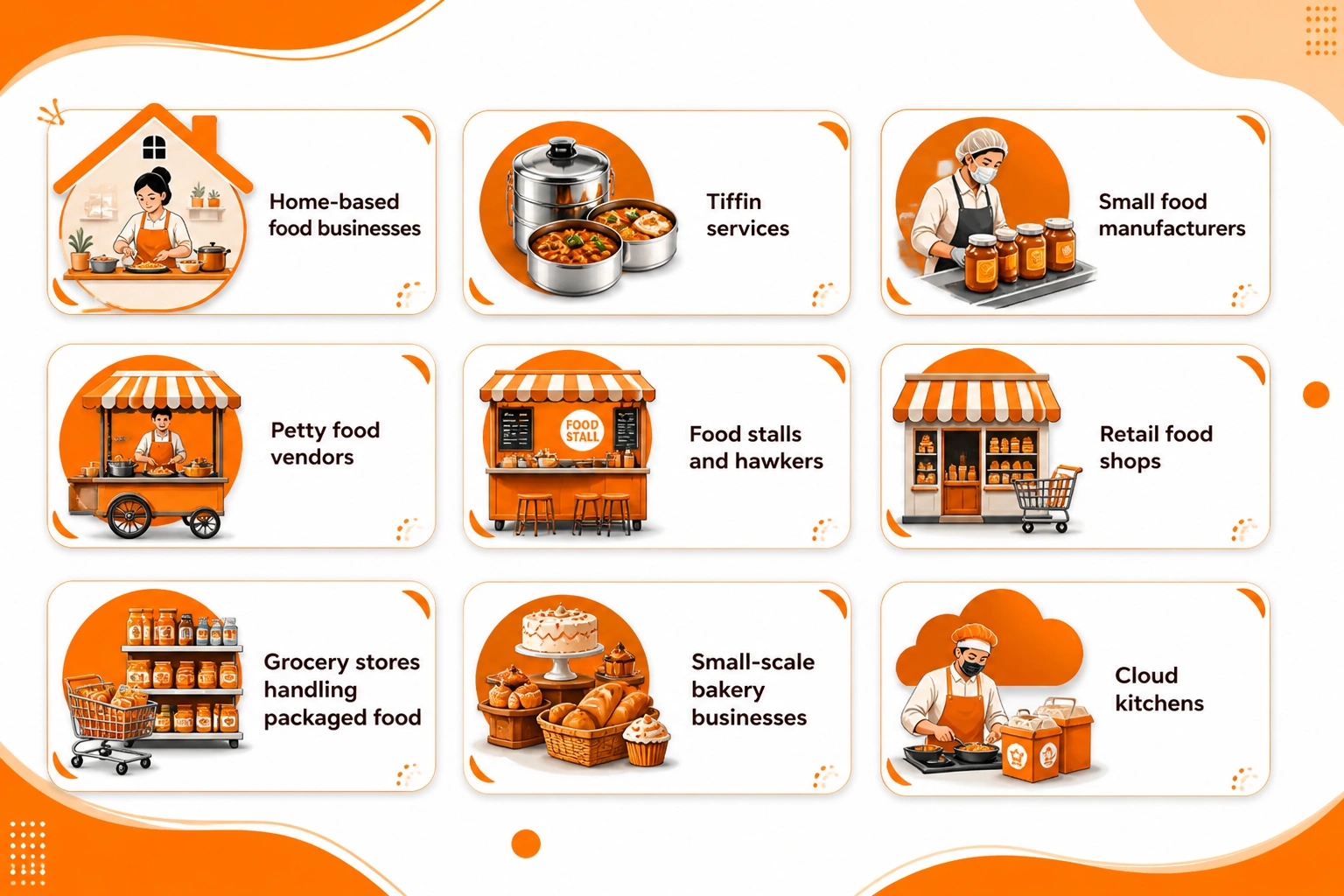
Any business involved in food-related activity may need FSSAI registration or a license. This includes small local food sellers as well as growing digital-first brands.
Businesses that commonly require FSSAI registration include:
- Home-based food businesses
- Tiffin services
- Small food manufacturers
- Petty food vendors
- Food stalls and hawkers
- Retail food shops
- Grocery stores handling packaged food
- Small-scale bakery businesses
- Cloud kitchens
- Online food sellers
- Food e-commerce brands
- Restaurants and cafes
- Distributors and wholesalers
If you are running a small food business with limited turnover, you may fall under Basic FSSAI Registration. This is generally suitable for petty food business operators and small businesses at the entry level.
However, if your business is larger, operates across multiple states, or is involved in manufacturing, importing, exporting, or large-scale distribution, you may need a State License or Central License instead.
This is why business owners should not assume that one category applies to everyone. The type of FSSAI approval depends on factors like annual turnover, scale of operations, business model, and food activity.
For example, a home chef selling locally may need basic registration, while a packaged snack brand selling across India through online marketplaces may require a higher category of license.
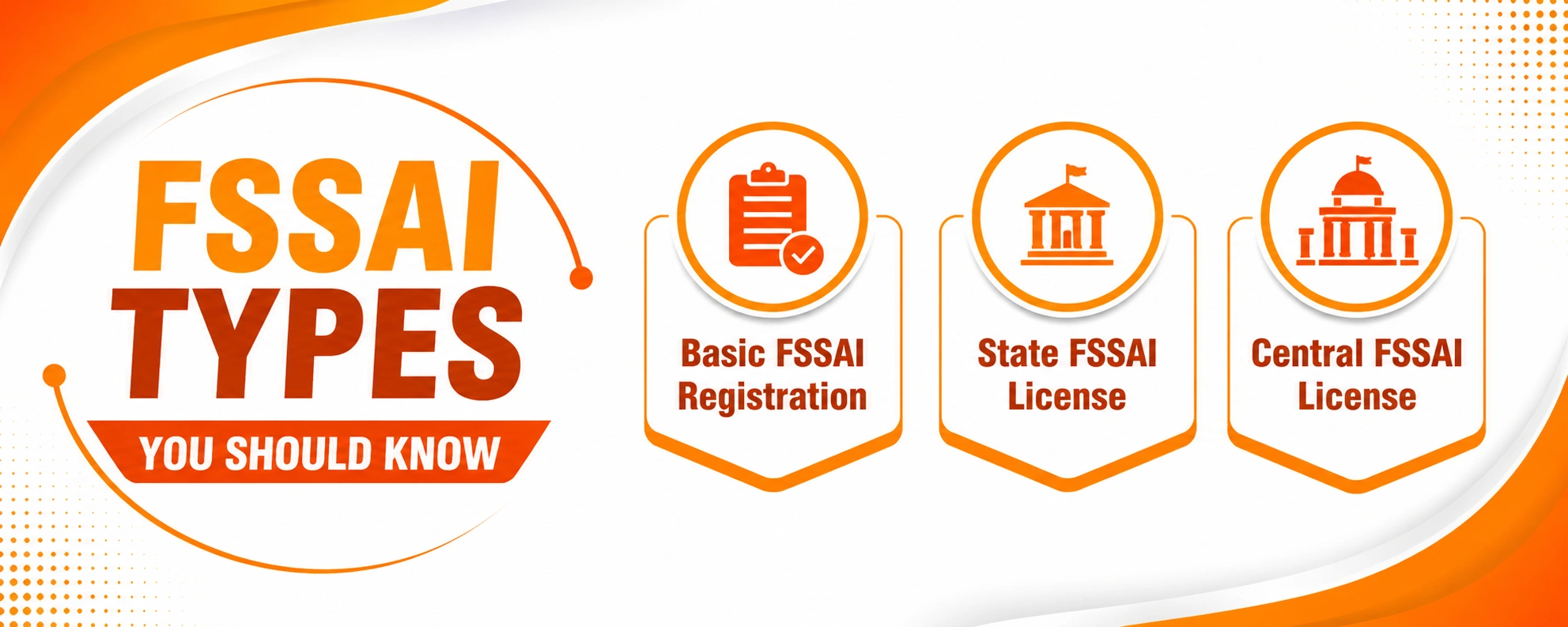
Types of FSSAI Registration and Licenses You Should Know
Before you begin the FSSAI registration online process, it is essential to understand the three main categories.
1. Basic FSSAI Registration
Basic FSSAI Registration is meant for small food businesses and petty food business operators. It is usually the starting point for businesses with lower turnover and limited scale. Small vendors, home-based sellers, and startups often begin here.
2. State FSSAI License
The State FSSAI license applies to medium-sized food businesses operating within one state. If your turnover or operational scale is beyond the basic registration limit, you may need a state license. Restaurants, manufacturers, transporters, and medium-sized brands often fall under this category.
3. Central FSSAI License
This is meant for large food businesses, importers, exporters, large manufacturers, operators working in multiple states, and businesses dealing at a national scale. Large food e-commerce brands and companies supplying across India may need a central license.
How to Choose the Right FSSAI Category
To choose the correct category, consider:
- Your annual turnover
- Your business size
- The type of food activity you perform
- Whether you operate in one state or multiple states
- Whether you import or export food items
- Whether you manufacture, distribute, repackage, or sell food
Selecting the wrong category is one of the most common mistakes made during the application. It can delay approval or lead to rejection. That is why understanding your business type before applying is very important.
Documents Required for FSSAI Registration Online
One of the easiest ways to avoid delays in the FSSAI registration process is to prepare your documents in advance. The exact document list may vary depending on your business type and the registration or license category, but some common documents are usually required.
Basic Documents Commonly Needed
- Passport-size photograph of the applicant
- Identity proof
- Address proof
- Business name and address details
- Contact number and email address
Business-Related Documents That May Be Required
- Proof of business premises
- Shop establishment certificate
- Partnership deed, if applicable
- Certificate of incorporation, if applicable
- Details of food products or food categories
- Declaration or undertaking forms
Important Preparation Tips
Make sure your scanned documents are clear and readable. The name, address, and business details in your documents should match the application form exactly. Even small mismatches in spelling, address format, or applicant details can create problems during verification.
Also, use an active mobile number and email address because these are important for communication, updates, and reference tracking.
Having all documents ready before starting the process saves time and reduces the risk of incomplete submission.
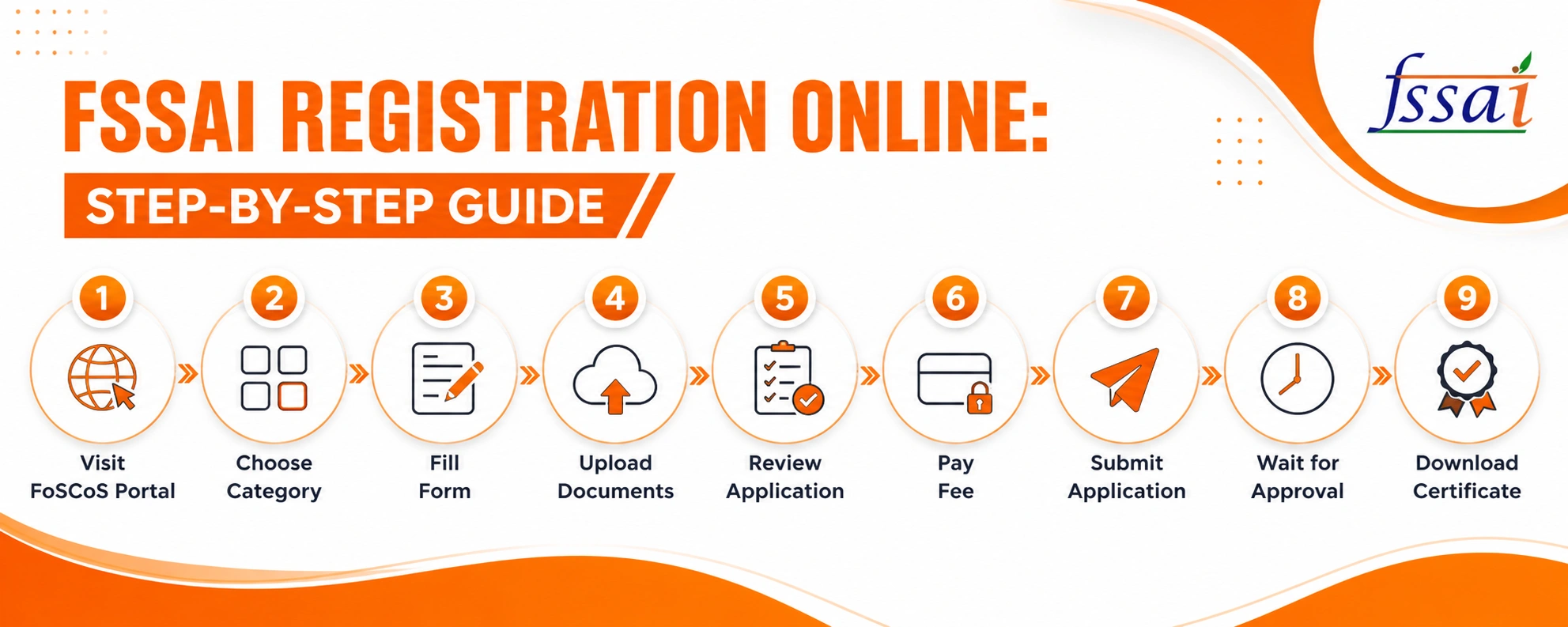
Step-by-Step Process to Apply for FSSAI Registration Online in India
If you are wondering how to apply for FSSAI registration online in India, here is a complete step-by-step guide in simple language.
Step 1: Visit the Official FoSCoS Portal
The online application process for FSSAI registration is done through the official FoSCoS portal. This is the authorised platform where applicants can register, apply, track, renew, and manage food license-related services.
Before starting, make sure you have a stable internet connection, all required documents, and your business details ready.
Step 2: Choose the Right Registration or License Category
Once you begin, the portal will ask you to select your state, business type, and category. This is where you must choose whether your business requires:
- Basic Registration
- State License
- Central License
Read the category details carefully. Your choice should depend on turnover, business model, and scale of operation. If you choose the wrong category, your application may be delayed or returned.
Step 3: Fill in the Application Form
Enter every detail carefully. The information should be accurate, current, and consistent with your documents. After selecting the category, you need to fill in the application form with your business details. Common details include:
- Applicant name
- Business name
- Business address
- Contact details
- Type of food business activity
- Nature of products handled
Step 4: Upload the Required Documents
Next, upload the necessary documents in the specified format and size. This part is critical because unclear, incomplete, or incorrect documents can lead to rejection or clarification requests.
Double-check file quality before uploading. Keep digital copies properly named so you can identify them easily.
Step 5: Review the Entire Application
Before making a payment, review the full application once again. Check:
- Name spelling
- Business address
- Category selected
- Uploaded documents
- Contact information
- Food activity description
Many application problems happen because people skip the review step. Even a minor error can delay approval.
Step 6: Pay the Applicable Fee
After reviewing the application, proceed with fee payment. The fee depends on the type of registration or license selected. The portal will show the applicable amount before final submission.
Keep the payment receipt or confirmation safely saved for future reference.
Step 7: Submit the Application
Once payment is successful, submit the form. After submission, you will receive an acknowledgement or reference number. This number is important because it helps you track the status of your application later.
Step 8: Wait for Verification and Approval
After submission, the authorities review the application and documents. In some cases, they may ask for clarification, correction, or additional documents. For certain license categories, there may also be inspection requirements.
If your application is complete and correct, it moves toward approval and certificate issuance.
Step 9: Download and Use Your FSSAI Certificate
Once approved, you can download your FSSAI certificate from the portal. Keep both digital and printed copies for your records. If required, display the certificate at your business premises and use your FSSAI number on packaging, bills, or business profiles as per the applicable rules.
FSSAI Registration Fees, Processing Time, and Validity
When applying for FSSAI registration online, many business owners want to know about the cost, approval timeline, and validity period.
FSSAI Registration Fees
The fee depends on whether you are applying for basic registration, a state license, or a central license. The amount is different for each category. Since your business type determines your registration type, always confirm the correct category before payment.
Processing Time
The processing time may vary depending on: application form accuracy, proper documentation, listing of the type of business and inspection and clarification from authorities.
If all details are submitted correctly, approval is usually faster. Incorrect or incomplete applications can take much longer.
Validity
FSSAI registration and licenses are issued for a certain validity period. Business owners must keep track of the expiry date and renew the registration on time. Late renewal can lead to penalties, compliance problems, or business interruptions.
It is a good practice to set reminders well before the expiry date so your food business continues to operate without disruption.
Common Mistakes to Avoid While Applying for FSSAI Registration Online
Even though the process is online and straightforward, many applicants face delays because of avoidable mistakes.
Choosing the Wrong Category
One of the biggest mistakes is selecting basic registration when the business actually needs a state or central license. Always assess your turnover and business model first.
Uploading Incomplete or Unclear Documents
Blurred scans, missing pages, or mismatched documents can slow down approval. Clear, accurate, and properly organised documents make the process smoother.
Entering Incorrect Business Information
Your name, phone number, email address, business location, and food activity details must be correct. Even small errors can lead to correction requests.
Ignoring Application Review
Some applicants hurry through the submission without reviewing the details. This often results in avoidable errors that could have been fixed in a few minutes.
Delaying Renewal
Getting registered is not enough. You also need to monitor the validity period and renew it within time to avoid future issues.
Avoiding these mistakes improves your chances of faster approval and better compliance.
Benefits of Getting FSSAI Registration for Your Food Business
FSSAI registration is not just a legal formality. It brings real value to your business, especially if you want long-term growth. A registered business appears more professional and trustworthy. This is especially helpful for startups, small businesses, and home-based brands trying to build a strong image.
- Builds Customer Trust
- Improves Brand Credibility
- Supports Online Selling
- Helps in Business Expansion
- Reduces Legal Risk
Conclusion
Applying for FSSAI registration online in India is an important step for any food business that wants to operate legally and grow with confidence. From small home-based sellers to food e-commerce brands and expanding restaurant businesses, FSSAI compliance builds trust, improves credibility, and supports long-term growth.
If you are planning to start or scale a food business in India, do not treat FSSAI registration as a formality. Treat it as a smart business move that protects your brand and strengthens your market presence.