

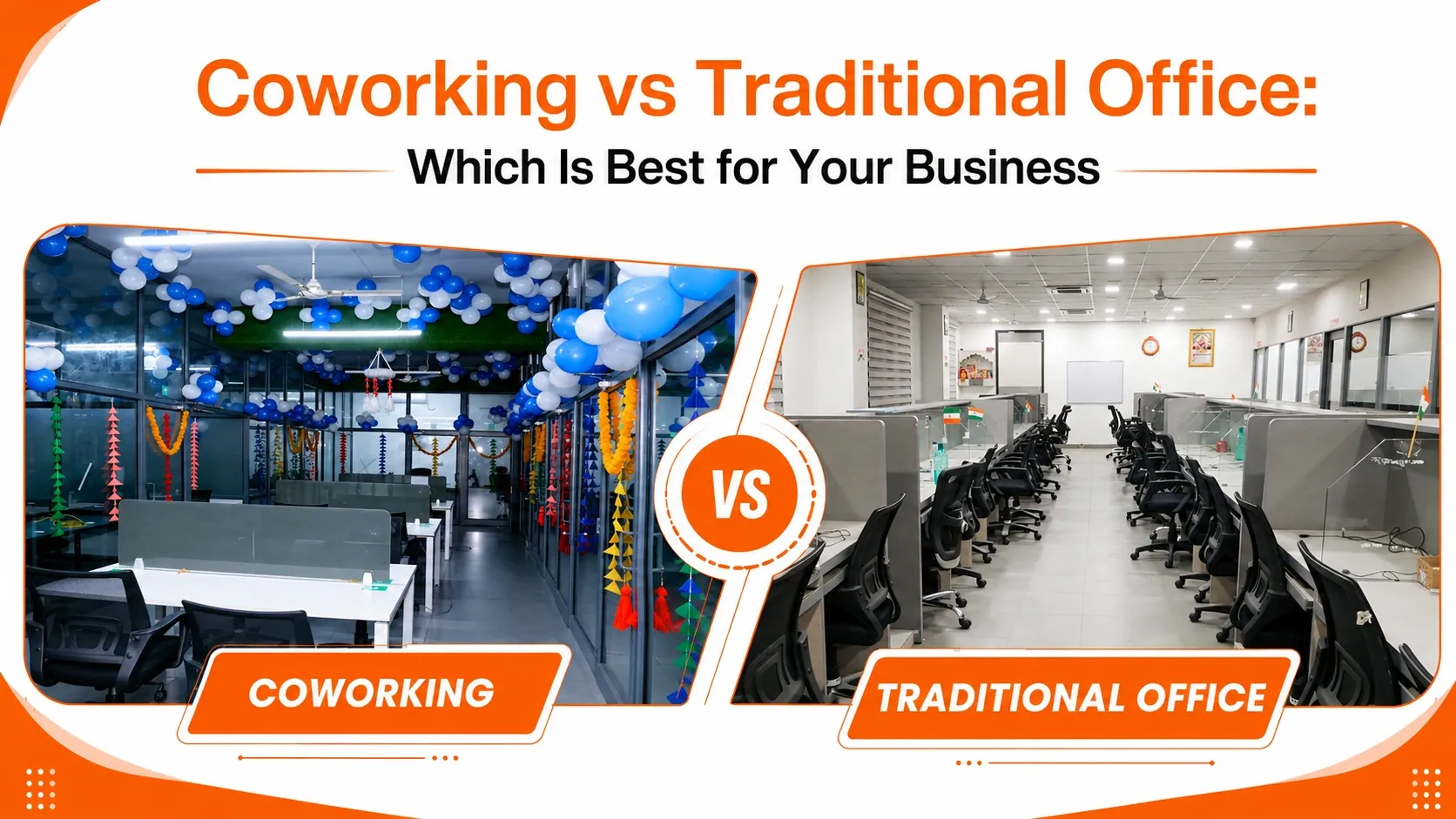
Coworking vs Traditional Office: Which Is Best for Your Business
The nature of the workplace has evolved substantially in recent years. From startups and SMEs to freelancers and multinational corporations, everyone is reconsidering how and where they work. Choosing between a coworking space and a traditional office is one of the biggest decisions businesses have nowadays.
Each of these two options has its own advantages, but what is best for you depends on the size of your business, your budget, your work culture, and your future goals. Whereas traditional office space is more about privacy and long-term stability, coworking space is geared toward flexibility and collaboration.
In this guide, we will go through the coworking vs traditional office comparison in more detail to help you determine which one is best for your business in 2026.
What Is a Coworking Space?
Share your workspace, meet new friends, experience new cultures, forge new collaborations, and live like a local in vibrant coworking spaces across the globe. These places normally have desks for rent, private cabins, conference rooms, wifi, access to a cafeteria, and more at a single membership tier.
Today’s coworking spaces are crafted for productivity, networking, and collaboration. They are particularly popular with startups and hybrid teams as they minimize the cost of setting up and allow businesses to scale rapidly.
What Is a Traditional Office?
Traditional offices represent private commercial spaces leased out to a single company. Companies generally lease for the long term and do all their own interiors, furniture, utilities, janitorial services, maintenance, and security.
Traditional offices provide more options for branding, layout, and culture. They are usually the choice of larger companies that have established teams and can predict the long-term needs of their business.
Key Differences Between Coworking and Traditional Offices
Deciding between a busy coworking space and a traditional office comes down to your business needs, budget, team size, and work preferences. Here are the key differences businesses need to know before deciding.
1. Cost Structure
Coworking spaces: Flexible Coworking spaces tend to operate on a flexible monthly payment model with minimal upfront investment, making them highly cost-effective for startups and small businesses. One of the biggest benefits of coworking spaces is that utilities, internet, furniture, maintenance, and cleaning services are usually included in the membership plan, helping businesses reduce operational expenses.
Traditional offices: Conventional office spaces have higher upfront costs to cover things like security deposits, interiors, furniture, utilities, and long-term lease agreements.
2. Flexibility
Coworking spaces: Flexible coworking spaces enable companies to scale fast, adding and removing seats as needed. Great for startups and growing teams, they offer short-term contracts.
Traditional offices: These offices are less flexible as companies typically sign long-term lease agreements, which make it hard to grow or shrink.
3. Privacy and Security
Traditional offices: They provide full privacy and better management of sensitive information, meetings, and security systems.
Coworking spaces: Coworking spaces are shared environments, and they can compromise the level of confidentiality, especially for companies working with confidential information.
4. Networking Opportunities
Coworking spaces: These types of spaces promote collaboration and networking via shared spaces, community events, and professional exchanges.
Traditional offices: Fixed offices are oriented towards collaboration within the internal teams and are not open to outside professionals.
5. Office Setup Time
Coworking spaces: They are fully equipped, so companies can start working right away.
Traditional office: Conventional office spaces can take weeks or months to set up and become operational.
6. Branding and Customization
Traditional office: Standard office workplaces offer the freedom to design your interiors, display your branding, and create a unique culture at work.
Coworking spaces: Coworking environments usually provide less freedom for personalization because the office is shared among different companies.
7. Best Suitable Businesses
Coworking spaces: Flexible spaces are a good fit for startups, freelancers, and small companies wanting flexibility and affordability.
Traditional office: Corporate office setups suit growing organizations that require a professional environment, operational security, and a stable long-term presence.
Coworking vs Traditional Office: Quick Comparison Table
| Feature | Coworking Space | Traditional Office |
| Initial Cost | Low | High |
| Flexibility | Very High | Limited |
| Setup Time | Immediate | Weeks/Months |
| Privacy | Moderate | High |
| Branding Control | Limited | Full Control |
| Networking | Excellent | Limited |
| Long-Term Stability | Moderate | Strong |
| Best For | Startups, freelancers, SMEs | Large enterprises |
Which Businesses Should Choose Coworking?
Coworking spaces are a great option for companies that prioritize flexibility, cost-effectiveness, networking, and growth potential. They cater to the needs of contemporary workstyles and are ideal for organizations that prefer not to bear the overhead of a conventional office environment.
Startups and New Businesses
Startups usually run with tight budgets and fast-paced growth in team sizes. Coworking spaces enable them to minimize their initial costs on office setup and, at the same time, offer professional infrastructure, meeting rooms, internet, and office space facilities in one package.
Freelancers and Solopreneurs
Freelancers, consultants, and independent professionals are able to work in a productive environment without the distractions that come with working from home. Coworking space also offers networking opportunities that can open doors to new clients, partnerships, and collaborations.
Remote and Hybrid Teams
Companies that have adopted hybrid or fully remote work policies can utilize coworking spaces as convenient satellite office locations for their team.
Creative Agencies and Tech Companies
Digital agencies, design studios, software startups, and technology companies have always been known to flourish in collaborative and creative spaces.
Companies Seeking Cost Efficiency
Shared resources like reception services, utilities, conference rooms, maintenance, and office equipment included in coworking memberships can be useful for companies looking to cut down on operating expenses.
Which Businesses Should Choose Traditional Offices?
Traditional offices are ideal for companies that need privacy, long-term stability, a more solidified brand image, and full control over their working environment. They have higher establishment and running costs, but provide benefits that many well-established businesses regard as essential.
Large Enterprises and Corporations
Established companies with steady heads of staff generally lean towards traditional offices as they require dedicated workstations, departmentization, and centralization of functions.
Businesses Handling Sensitive Data
Greater privacy and security are typically necessary for companies that have access to confidential client data, financial records, or legal paperwork, or that run secure internal processes.
Businesses That Need Strong Brand Identity
Traditional offices offer full customization of the interiors, layouts, meeting rooms, and branding features.
Companies With Long-Term Stability
The stable revenue and longer planning horizons of some organizations likely make traditional office space more manageable for them.
Businesses Requiring Dedicated Infrastructure
Some businesses require specialized space, such as for a server room, a laboratory, a warehouse, or an outfitting with special equipment.
Conclusion
There are benefits to both coworking spaces and traditional offices, and the right option is going to depend on what you're trying to accomplish as a business, how much money you have to spend, and the structure and style of your team. Coworking spaces are optimal for startups, freelancers, and expanding companies that seek flexibility and cost-efficiency, while traditional offices are suited for businesses that need privacy, branding control, and long-term stability.
If yes, you are in the right place. Virtual State GST virtual office provider in India offers you a professional virtual office address with GST registration in all Indian States. Their services enable start-ups and companies to have a professional presence without having to bear the cost of running an office.