

Online Trademark Registration in India: Step-by-Step Process
Your brand is more than just a name; it’s your identity, your reputation, and your business’s future. But here’s the reality: if you don’t protect it legally, someone else can claim it, and you might have no right to stop them.
This is where Online Trademark Registration is necessary. Nowadays, securing your brand is no longer a complicated, paperwork-heavy task. With an easy and straightforward online process for trademark registration, you can secure your business name, logo, or tagline from anywhere in the quickest and safest way.
India's trademarks are covered by the Trademark Act 1999, ensuring protection under the law of the land against infringement and passing off. Registering your trademark will give you exclusive rights and help your brand stand out in a crowded marketplace.
If you are a startup founder, small business owner, or entrepreneur planning to launch something new, knowing how to register a trademark in India is no longer optional; it’s essential.
This guide will show you a step-by-step digital filing system, essential tips to avoid costly mistakes, and everything you need to confidently secure your brand online.
What is Online Trademark Registration?

Imagine creating a brand that people recognize, trust, and remember…and then someone else starts using your name. Sounds risky, right? That’s exactly what Online Trademark Registration protects you from.
Simple words, Online Trademark Registration is the registration of your brand name, Logo, tagline, or symbol on the internet through an online platform. You get exclusive ownership rights over it, which means that no one else can use or copy your brand without your permission.
The best part? No more hassle with complicated paperwork. The modern online trademark registration process is simple and very fast-paced; everything from application to active approval can be done very smoothly online.
Important to know: A trademark registration is valid for 10 years from the date of registration. However, unlike a patent, the trademark period does not end after that. You may also renew your trademark every 10 years, protecting your brand for as long as you need by using it and renewing it.
Why Trademark Registration is Important
You may feel like your brand name is safe because you use it, but without trademark registration, it’s not really yours. Registering your trademark isn’t simply a legal formality; it’s a good business decision that safeguards all the things you’re building.
- Protects Your Brand Identity: Your brand is what makes you unique. Registering your trademark means no one else can use your name, logo, or tagline, so you can stand out with confidence in the marketplace.
- Prevents Unauthorized Usage: If you don’t protect it, someone else can misuse your brand for their own ends. A registered trademark gives you the legal right to stop anyone who uses your brand identity, and you can also take action against them if necessary.
- Builds Customer Trust: A registered trademark indicates professionalism and legitimacy. Customers feel more confident purchasing from a brand that is officially recognized and protected by law.
- Gives Legal Ownership Rights: As soon as you file a trademark application, you become the owner of the trademark. You have the sole right to use it, and you can sue for infringement.
- Add Value to Your Business: A trademark is a type of intellectual property. It adds to the value of your brand, draws in investors, and can be licensed or sold in the future.
7 Steps to Online Trademark Registration in India
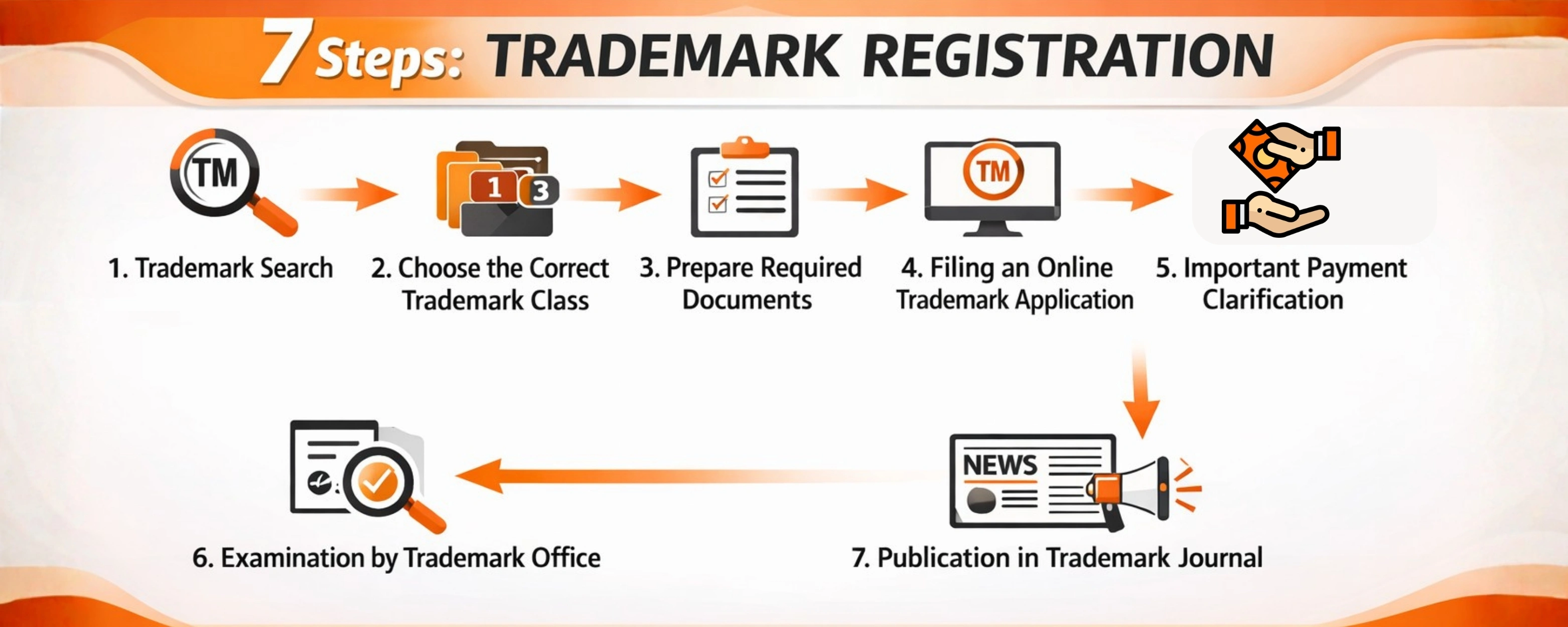
Registering a trademark online is easy. But doing it correctly for the first time is what matters. Although you can submit it on your own, taking help from a professional consultant can help you save time, avoid errors, and increase your chances of approval.
Step 1: Trademark Search
Before you apply, make sure that your trademark is unique and not already in use.
- Go to the official IP India website.
- Look for comparable titles, logos, or sayings.
- Do not copy; you may get rejected.
Step 2: Choose the Correct Trademark Class
Registration of a trademark is classified into 45 classes according to the type of business. Class Types and Classifications of Trademarks
- Classes 1–34 represent: Goods
- Classes 35–45: Services
Step 3: Prepare Required Documents
Before submission, make sure you have all your documents ready so you don’t face any last-minute hassles. You will need to provide the following:
- Information About the Applicant (Individual/Company)
- Logo (if applicable)
- Proof of business registration
- MSME /Start-Up certificate (attached), (optional for fee benefits)
- Power of Attorney (if you are applying through an agent)
Step 4: Filing an Online Trademark Application
Now for the best part, fill out your application online.
- Visit the IP India e-filing portal
- Register or log in to your account
- Complete the TM-A form
- Attach the necessary documents
- Pay the fee to the government.
Step 5: Important Payment Clarification:
This is a critical stage where many applicants are confused, particularly as to fees and refunds.
Government Fees (Approx.):
- ₹4,500-6000 (for Individuals / Startups / MSMEs)
- ₹9,000-10,000 (for Companies / LLPs / Others)
Professional Fees (if you hire an expert):
- ₹1,000 – ₹5,000 (may vary depending on service provider)
Important Payment Clarification:
- The government fee is nonrefundable, even if your trademark is refused, opposed, or abandoned.
- This fee is imposed for the handling, examination, and record-keeping services of the trademark office.
- Once paid, it cannot be claimed back under any circumstances.
Step 6: Examination by Trademark Office
Once you have applied, the registrar will consider your application. They look for:
- Whether your trademark is unique
- Whether it complies with the law
- Whether it is similar to other trademarks
Step 7: Publication in Trademark Journal
If your application is successful at the examination, it will be published in the trademark journal.
- The public may objections within 4 months.
- If there is no opposition, the application will proceed.
Step 8: Trademark Registration Certificate
This is it, the point at which your brand is legally yours. Your trademark gets officially registered.
- You will be given a registration certificate.
- You can use the ® symbol now.
Why You Need a Consultant for Trademark Registration
Seeking a trademark independently might seem easy; however, this is the point at which the majority of people stumble. A mistaken class choice, incomplete information, or a missed trademark conflict can cause refusals, delays, or even rejections. And once you file the application, the government fee is non-refundable, so even minor errors can result in loss of both time and money. Your time is very precious, and if any legal objections arise, it can consume a significant amount of it; therefore, proceeding without the right knowledge can be quite daunting.
That’s exactly where a trademark consultant becomes your biggest advantage. Because of these challenges, many businesses choose to work with experienced consultants who understand the process end-to-end. Companies such as Virtual State GST are not only chosen for filing but also for making the entire process easier. Consultants provide complete support—from trademark search and correct class selection to handling objections efficiently.
The real advantage of a consultant is simple: you avoid costly mistakes, save valuable time, and significantly increase your chances of approval. Don’t take risks when it comes to your brand—expert guidance ensures everything is done right the first time.
Common Mistakes to Avoid When Registering Your Trademark
Registering a trademark may seem easy, but minor errors can result in refusals, delays, or even abandonment of your rights in the mark. Don't make these common mistakes to keep your registration process smooth.
- Selecting a Similar Trademark: Choosing a name or logo too close to someone else’s trademark is one of the biggest mistakes.
- Choosing the Wrong Class: Deciding the right class for your business is important for trademark protection.
- Incomplete Documentation: You may get delayed or refused if your documents are missing or incorrect.
- Ignoring Objections: When the trademark office issues a refusal, failure to respond can lead to abandonment of the application.
- Filing Without Doing the Proper Research: Failing to conduct a trademark search or rushing through the process can end up costing you time and money.
Conclusion
In the world of business, your brand is your largest asset, and protecting it should never be an afterthought. Now with the introduction of online trademark filing in India, protecting your business name, logo, or tagline has never been quicker, easier, and more convenient.
But keep in mind, it’s not just about submitting an application; it’s about submitting the right one. One small error can cause delays, objections, or even disqualification. This is why it is important to know the procedure, the costs, and the legal aspects before you start. Whether you’re a start-up, small business owner, or entrepreneur, taking action today can save you from big legal trouble tomorrow. And if you want a smooth, error-free experience, an expert can make all the difference.